Industrial machinery operates under constant stress—heavy loads, continuous motion, temperature fluctuations, and exposure to contaminants. In such demanding environments, lubrication is not optional; it is a critical requirement for reliability and safety. Industrial greases are specially designed to protect machine components where oils may fail to remain effective. Choosing the right grease ensures smooth operation, reduced wear, and extended equipment life.
A Brief Overview of Industrial Grease
Industrial grease is a semi-solid lubricant developed to stay in position while delivering consistent lubrication over extended periods. Unlike lubricating oils that flow freely, grease is formulated to adhere to surfaces, making it ideal for components that operate intermittently, at low speeds, or under high loads.
Grease formulations typically consist of three functional elements: a lubricating oil that minimizes friction, a thickener that gives grease its body, and performance additives that enhance protection against wear, oxidation, corrosion, and extreme pressure. During machine operation, the grease releases controlled amounts of oil to create a protective lubricating film between metal surfaces. When motion slows or stops, the grease regains its structure and continues to protect the component.
Beyond friction reduction, industrial greases serve as protective barriers. They seal out dust, moisture, and chemicals, dampen vibration, and prevent rust formation. These qualities make grease indispensable in bearings, joints, couplings, and exposed machine parts where consistent oil circulation is impractical.
Comparison of Grease Types
Understanding the differences between grease formulations is essential for correct selection. Among the many options available, lithium vs calcium grease remain the most widely used in industrial settings.
Lithium Grease
Lithium grease is valued for its versatility and dependable performance. It offers good resistance to heat, maintains consistency under mechanical stress, and performs well across a wide range of operating speeds. Lithium greases are commonly chosen for applications where temperature stability and long service life are required.
This grease type performs effectively in rolling bearings, electric motors, and general industrial machinery. Its ability to maintain structure under continuous motion makes it suitable for equipment exposed to vibration and variable loads.
Calcium Grease
Calcium grease is primarily recognized for its excellent resistance to water. It performs reliably in damp, humid, or washdown-prone environments where moisture contamination is unavoidable. Calcium grease also provides strong protection against rust, making it ideal for outdoor and corrosion-sensitive applications.
However, calcium greases generally operate at lower temperature limits compared to lithium greases. They are best suited for applications where water resistance is more critical than high-temperature performance.
When evaluating lithium vs calcium grease, the decision depends on environmental exposure, temperature range, load conditions, and equipment design. Selecting the correct grease type prevents premature lubricant breakdown and component damage.
Applications of Industrial Greases
Industrial greases are used across multiple sectors, each with distinct lubrication challenges.
Automotive and Transportation
Greases are widely used in wheel bearings, chassis components, joints, and suspension systems. Lithium greases are particularly effective in these applications due to their temperature stability and load-handling capability.
Manufacturing and Assembly Plants
Production equipment relies on grease to maintain smooth operation of bearings, conveyors, guide rails, and couplings. Consistent lubrication helps reduce downtime, improve efficiency, and maintain production quality.
Marine and Offshore Equipment
Machinery exposed to saltwater, humidity, and frequent washdowns requires greases with strong water resistance. Calcium-based greases provide reliable protection against corrosion and washout in these conditions.
Agricultural Machinery
Farm equipment operates in dusty, muddy, and wet environments. Greases protect moving parts such as pins, bushings, and joints from abrasive wear and moisture ingress.
Construction and Heavy Equipment
Earthmoving machines, loaders, and cranes depend on high-performance greases to withstand shock loads and continuous vibration. Proper greasing significantly extends service intervals and component life.
MAGNUM Grease Product Fit
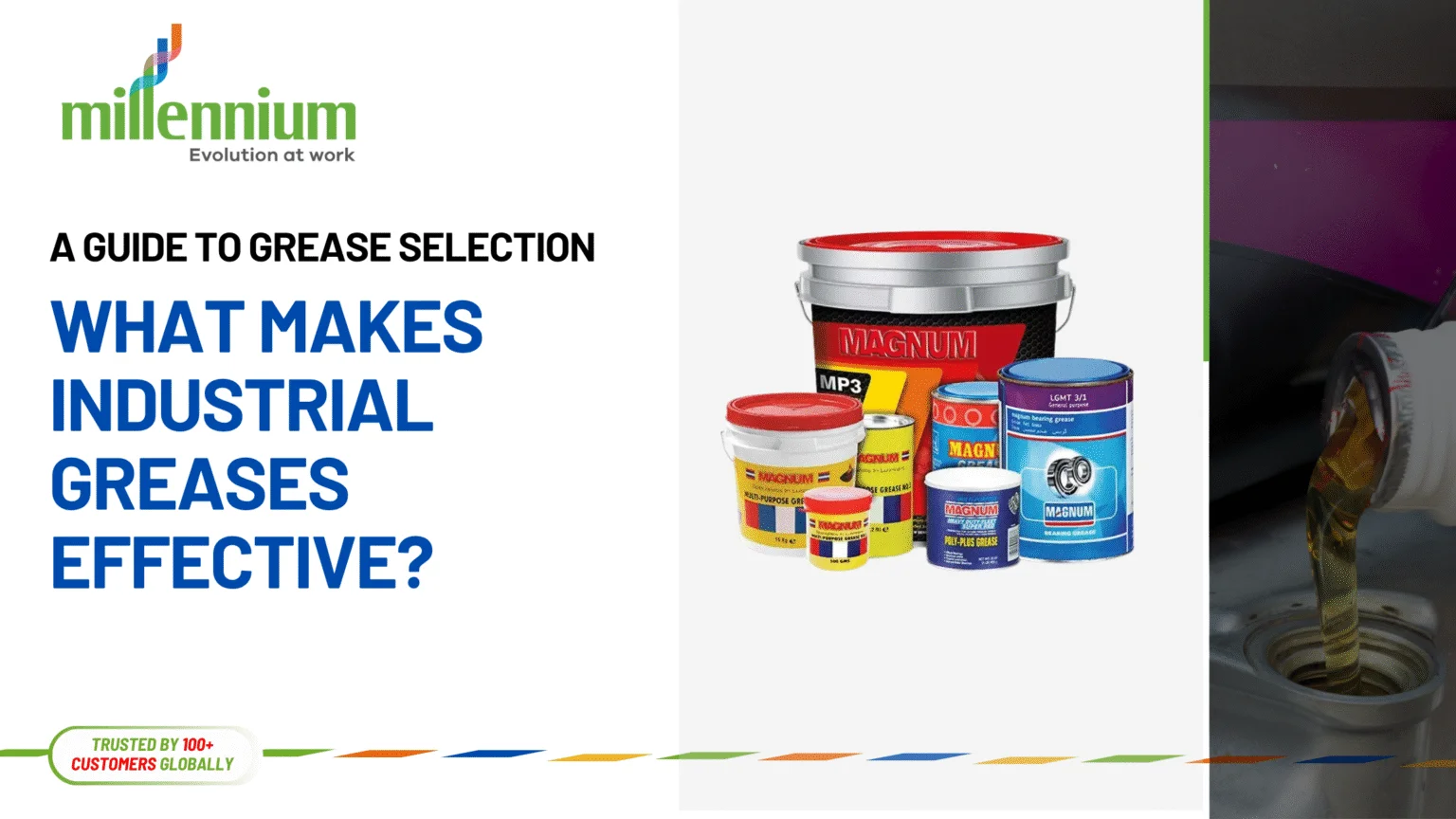
MAGNUM Greases are engineered to meet the demanding lubrication needs of modern industries. With carefully selected base oils, advanced thickener systems, and performance-enhancing additives, MAGNUM offers reliable grease solutions for a wide range of applications.
MAGNUM Lithium Greases are designed for equipment operating under high temperatures, heavy loads, and continuous motion. They provide excellent mechanical stability and long-lasting protection, making them suitable for bearings, motors, and general industrial machinery.
MAGNUM Calcium Greases are formulated for environments where moisture resistance is essential. These greases deliver strong protection against water washout and corrosion, ensuring reliable performance in marine, agricultural, and outdoor equipment.
With a focused range of industrial greases, MAGNUM helps simplify grease selection while ensuring equipment receives the protection it needs to operate efficiently and safely.
Conclusion
Industrial greases play a vital role in machinery performance by reducing friction, preventing wear, and shielding components from harsh environments. Understanding grease composition, comparing grease types, and aligning lubricant properties with operating conditions are essential steps in effective grease selection. With purpose-built formulations, MAGNUM Greases provide dependable lubrication solutions that support longer equipment life, reduced maintenance, and improved industrial productivity.