
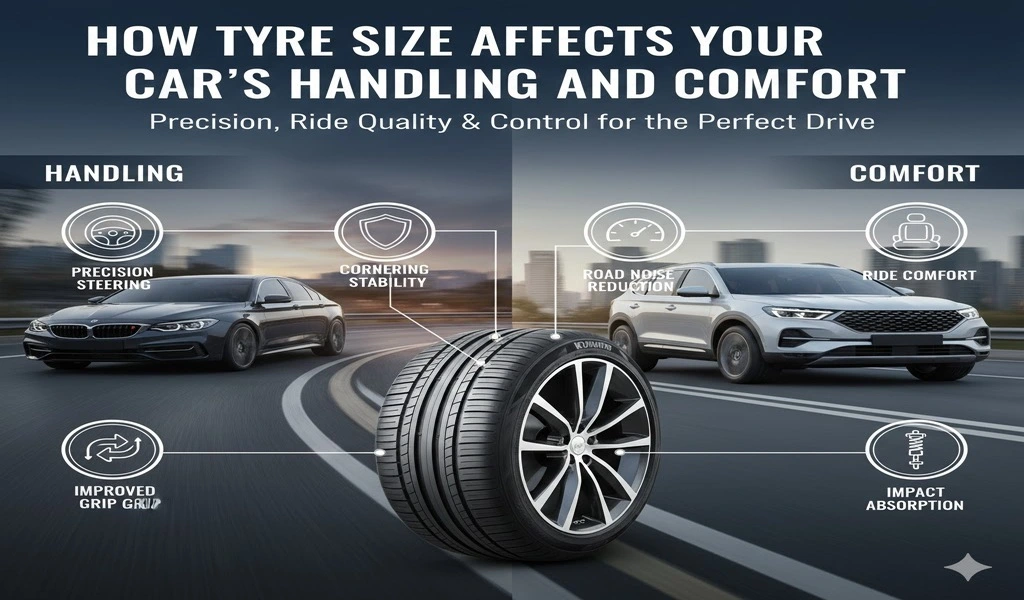
Most drivers view their tyres simply as the black rubber circles that keep their car moving. However, tyres are sophisticated components that dictate how your vehicle interacts with the road. The size of your tyres plays a massive role in your driving experience. It influences everything from steering precision to how much road noise enters the cabin.
For drivers in the UAE, understanding this relationship is particularly important. Long commutes on highways like Sheikh Zayed Road require stability and comfort. Navigating the heat and traffic of city centres demands reliable grip and braking. The specific dimensions of your tyres change the physics of your vehicle.
Making the right choice can transform a bumpy ride into a smooth journey. Conversely, the wrong size can make a car feel unstable or harsh. Understanding the tyre size impact on handling helps you make safer decisions. It ensures your vehicle performs optimally in the demanding local climate.
Understanding Tyre Size Basics
To understand handling and comfort, you must first decipher the writing on the sidewall. Those numbers and letters are not random; they are precise engineering specifications. They tell you the width, the height of the sidewall, and the rim diameter.
These three measurements work together to determine the overall shape of the tyre. Changing just one of these numbers alters the tyre’s performance characteristics. It is a balancing act between different performance goals.
For example, a sports car tyre looks very different from an SUV tyre. This is because they prioritize different aspects of driving. One focuses on grip and speed, while the other prioritizes load capability and comfort. Knowing these basics empowers you to choose the right replacement.
What Tyre Width Means for Your Car
The first number in a tyre sequence, such as 205 or 225, indicates the width in millimetres. This measures the tyre from one sidewall to the other. Width determines the size of the contact patch with the road.
A wider tyre generally puts more rubber on the road surface. This increased surface area improves grip, especially during acceleration and braking. It allows the car to hold onto the asphalt better during sharp turns.
However, width comes with trade-offs in daily driving. Wider tyres have more rolling resistance, which can increase fuel consumption. They are also more prone to hydroplaning on wet surfaces if the tread design is poor.
Sidewall Height and Ride Comfort
The second number is the aspect ratio, which represents the height of the sidewall. It is a percentage of the tyre’s width. A tyre with a ’55’ aspect ratio has a sidewall height that is 55 percent of its width.
The sidewall acts as a secondary suspension system for your car. A taller sidewall contains more air and rubber to cushion impacts. This is crucial for absorbing bumps, potholes, and speed breakers found in city driving.
Lower profile tyres, often seen on luxury or sports cars, have shorter sidewalls. While they look stylish, they have less material to absorb shock. This transmits more road imperfections directly to the passengers.
How Tyre Size Influences Handling
Handling refers to how the car responds to your inputs at the steering wheel. It includes stability, cornering ability, and braking performance. Tyre size is one of the most significant variables in this equation.
Engineers tune a car’s suspension to work with a specific tyre size. When you change that size, you alter the geometry of the handling. This can result in a car that feels sharper or, conversely, more sluggish.
In the UAE, where highway speeds are higher, stability is a key safety factor. A car that feels planted inspires confidence in the driver. Understanding how dimensions affect this feeling is vital for safety.
Steering Response and Cornering Control
Steering response is how quickly the car turns when you move the wheel. Low profile tyres typically offer sharper steering response. This is because the shorter sidewall is stiffer and flexes less.
When you turn into a corner, a tall sidewall might bend or “roll” slightly. This creates a split-second delay in the car’s reaction. A short sidewall eliminates this flex, making the car feel more direct.
However, extreme stiffness can make the car feel twitchy on uneven roads. It requires more concentration to keep the car driving straight. For most daily drivers, a moderate profile offers the best compromise.
Stability at High Speeds
Driving on open highways requires a tyre that maintains its shape at speed. Wider tyres often provide better lateral stability. This means the car is less likely to be pushed around by crosswinds.
The footprint of the tyre helps anchor the vehicle to the road. This is especially important when changing lanes at 120 km/h. A stable tyre reduces the need for constant micro-corrections at the steering wheel.
Narrower tyres can feel less planted at high speeds. They may wander more within the lane, increasing driver fatigue. Choosing the right size ensures your highway journeys are relaxing rather than stressful.
Tyre Size and Driving Comfort
Comfort is subjective, but it usually means a smooth ride and a quiet cabin. In the UAE, where we spend hours commuting, comfort is a priority. Tyre size dictates how much vibration reaches your seat.
It is often a trade-off against high-performance handling. The features that make a tyre grip well in corners often reduce ride softness. Finding the sweet spot depends on your personal preferences and driving environment.
Impact on Suspension and Ride Quality
Your car’s metal suspension springs and shock absorbers do heavy lifting. However, the tyre deals with the initial impact of road irregularities. A tyre with a generous sidewall creates a buffer zone.
This buffer soothes the jagged feel of rough asphalt or concrete joints. If you switch to larger wheels with thin tyres, you lose this buffer. The ride becomes “crashy,” meaning you feel and hear every bump loudly.
For families and daily commuters, preserving ride quality is usually better than gaining cornering speed. A comfortable car is less tiring to drive in stop-and-go traffic.
Noise Levels and Cabin Comfort
As tyres roll, air gets trapped in the tread grooves and creates noise. Wider tyres generally produce more noise simply because there is more rubber hitting the road. This creates a louder hum or drone at highway speeds.
The profile height also changes the frequency of the sound produced. Low profile tyres on large wheels often create a hollow roaring sound. This can interfere with conversation or music inside the car.
Tyre manufacturers work hard to minimize this through tread design. However, the physical dimensions of the tyre remain a primary factor. Smaller, narrower tyres are naturally quieter in most applications.
Choosing a Balanced Tyre Size
For the average driver, the goal is to find a size that does everything well. You want enough grip for safety but enough cushion for comfort. Most standard sedans come with sizes optimized for this balance.
Many drivers consider commonly used sizes such as 215/55r17 when looking for a balance between smooth comfort and predictable handling on UAE roads. This specific size offers a good width for stability. It also retains enough sidewall height to absorb the harshness of city speed bumps.
Sticking to sizes like this ensures you are not compromising too much in one area. It provides a “best of both worlds” scenario for mixed driving conditions.
Tyre Size Considerations for UAE Roads
The United Arab Emirates presents a unique driving environment. We have world-class highways mixed with intense heat and occasional sand. These factors should influence your tyre size decisions.
A tyre that works well in a cold, wet climate might be poor here. You need equipment that can handle thermal stress and long distances. The size you choose affects how the tyre copes with these elements.
Heat Resistance and Tyre Flexibility
Heat generation is the enemy of tyre longevity. As a tyre rolls, the sidewall flexes and generates internal heat. Taller sidewalls flex more, which can generate more heat if under-inflated.
However, extremely low profile tyres have less air volume to dissipate that heat. In the UAE summer, asphalt temperatures can exceed 60 degrees Celsius. Maintaining the correct air pressure is critical regardless of size.
A moderate tyre size is often best for managing thermal loads. It allows for sufficient air volume to keep the tyre running cooler. This reduces the risk of blowouts during long summer drives.
City Roads Versus Highways
City driving involves frequent braking, turning, and navigating obstacles. A tyre with a taller profile protects your expensive alloy wheels from curb damage. It absorbs the shock of speed bumps which are common in residential areas.
Highway driving prioritizes stability and efficiency. A slightly wider tyre might offer better braking performance at high speeds. It helps bring the car to a stop quickly if traffic suddenly slows down.
Most drivers do a mix of both city and highway driving. Therefore, avoiding extreme sizes is usually the wisest path. Staying close to factory specifications handles this variety best.
Common Mistakes When Changing Tyre Size
Car enthusiasts often change wheels to improve the look of their vehicle. This practice, known as “upsizing,” involves larger metal wheels and thinner tyres. While it looks aggressive, it can cause mechanical headaches.
“Downsizing” is less common but happens when drivers want cheaper tyres. Both practices come with risks if not calculated correctly. It is essential to understand the consequences before spending money.
Effects on Speedometer and Fuel Efficiency
Your car’s speedometer is calibrated to the factory tyre diameter. If you install a tyre that is taller or shorter, the reading will be wrong. You might be driving faster than the gauge shows, leading to speeding fines.
Changing width also impacts your fuel economy significantly. Wider tyres increase aerodynamic drag and rolling resistance. This forces the engine to work harder to maintain speed.
Over time, this results in higher fuel bills for the same distance driven. For daily commuters, this added cost accumulates quickly. Efficiency should be a consideration in your size choice.
Impact on Safety and Warranty
Tyres that are too wide may rub against the suspension or wheel arch liners. This can damage the tyre sidewall and cause a sudden failure. It can also restrict the steering angle, making U-turns difficult.
Furthermore, unauthorized tyre sizes can void your vehicle’s warranty. Manufacturers may refuse to cover suspension repairs if non-standard wheels are fitted. Insurance companies may also reject claims if the vehicle is deemed unroadworthy.
Always verify that your chosen size is approved for your vehicle. Safety should never be sacrificed for aesthetics.
How to Choose the Right Tyre Size for Your Car
Selecting the correct tyre size does not have to be a guessing game. The information is readily available on your vehicle. Following the guidelines ensures your car performs as intended.
It removes the risk of mechanical interference or speedometer errors. It guarantees that the load capacity is sufficient for your passengers. Here is how to find the right numbers.
Follow Manufacturer Specifications
The most reliable source is the placard located on the driver’s door jamb. It lists the approved tyre sizes and the correct air pressures. You can also find this information in the owner’s manual.
These sizes have been rigorously tested by the vehicle manufacturer. They offer the optimal blend of handling, comfort, and safety. Sticking to these recommendations is the safest strategy for most drivers.
Match Tyre Size to Driving Style
If your car lists multiple approved sizes, you can choose based on preference. If you prioritize comfort and fuel economy, choose the narrower option with a taller sidewall. This is ideal for high-mileage commuters.
If you enjoy spirited driving and want sharper steering, choose the wider, lower profile option. This will improve cornering grip at the expense of some ride comfort. Be honest about your daily driving needs when deciding.
Frequently Asked Questions
Does tyre size really affect comfort?
Yes, sidewall height and width directly influence how bumps and vibrations are absorbed.
Are wider tyres always better for handling?
Wider tyres improve grip but may reduce comfort and increase road noise.
Can changing tyre size affect fuel economy?
Yes, incorrect sizing can increase rolling resistance and fuel use.
Is it safe to change tyre size from factory specs?
Minor changes may be safe, but large deviations can affect safety and warranty.
Which tyre size is best for UAE roads?
Balanced sizes that offer heat resistance, comfort, and stability work best.
Conclusion
In conclusion of this blog, the size of your tyres is a fundamental factor in how your car drives. It dictates the level of comfort you feel and the control you have. Tyre size impact on handling is significant and should not be overlooked.
For UAE drivers, finding a balance is key to handling heat and diverse roads. Avoid extreme sizes that compromise safety or reliability. By choosing the correct specifications, you ensure a smoother, safer, and more efficient drive every day.